Program overview
Goal Get It! Summer Research Scholars Program is a tuition-free, research-based summer opportunity for high school students who are eager to explore STEM through guided inquiry, mentorship, and hands-on academic work. Designed especially for students who may be conducting a research project for the first time, the program introduces participants to the process of asking meaningful questions, investigating a problem in depth, interpreting evidence, and communicating findings clearly.
Students are matched with mentors and supported as they complete a small, individualized research project over the summer. Rather than focusing only on lectures or coursework, the program emphasizes the experience of actually doing research: developing ideas, reading and discussing relevant material, learning foundational methods, receiving feedback, and presenting a final project. Along the way, students build confidence, academic independence, and a stronger understanding of what research in STEM can look like.
Depending on the field of study, students may also participate in shared offerings such as lectures, labs, journal clubs, discussion sessions, or other curriculum-based activities. Available subject areas may include Mathematics, Computer Science, Electrical Engineering, Chemistry, Physics, Astrophysics and Astronomy, and Mechanical Engineering. We especially welcome first-generation college-bound students, students from underrepresented backgrounds, and students from communities with limited access to advanced research opportunities.
Eligibility
- Students currently in Grades 9-12
- Students who can demonstrate a clear interest in STEM fields
- Students prepared to engage seriously in a structured summer academic program
- Students willing to complete an individualized research project with mentor support
- There is no minimum GPA requirement and prior research experience is not required
What students can expect
- One-on-one or small-group mentorship while developing an individualized STEM research project
- Structured support in asking questions, reviewing background material, learning methods, and interpreting evidence
- Shared offerings such as lectures, labs, journal clubs, or discussion sessions depending on field and mentor group
- A final presentation or project deliverable that communicates what the student investigated and learned
Research tracks
Mathematics
The Mathematics track is designed for students who are excited by abstraction, logic, structure, and deep problem-solving. Students may explore areas such as number theory, combinatorics, geometry, algebra, discrete mathematics, probability, or mathematical modeling while learning how mathematicians investigate patterns, formulate conjectures, test ideas, and build rigorous arguments. With mentor guidance, students develop independence in mathematical thinking while gaining exposure to how original questions are explored through curiosity, persistence, and clear reasoning.
Computer Science
The Computer Science track introduces students to research through algorithmic thinking, computational experimentation, and the design of systems that solve meaningful problems. Topics may include algorithms, artificial intelligence, data science, machine learning, theoretical computer science, optimization, cybersecurity, human-computer interaction, or software systems depending on mentor expertise. Students learn to use computation not only to build applications, but also to ask questions, test ideas, analyze tradeoffs, and explain complex processes in a structured way.
Electrical Engineering
The Electrical Engineering track offers an introduction to research at the intersection of circuits, signals, systems, electronics, and technological design. Students may engage topics such as analog and digital circuits, signal processing, communications, control systems, embedded systems, sensors, semiconductor concepts, or related areas while learning how engineering research combines theory with practical problem-solving. Mentor support helps students build technical maturity, quantitative reasoning, and a stronger appreciation for how electrical engineering shapes modern technology.
Chemistry
The Chemistry track is designed for students who want to explore how matter behaves at the molecular and atomic level and how chemists use evidence to understand structure, transformation, and reactivity. Depending on project design, students may work with topics such as chemical bonding, reaction mechanisms, thermodynamics, kinetics, analytical chemistry, materials chemistry, computational chemistry, or the interpretation of experimental data and scientific literature. The emphasis is on chemistry as an investigative process grounded in evidence-based reasoning and careful interpretation.
Physics
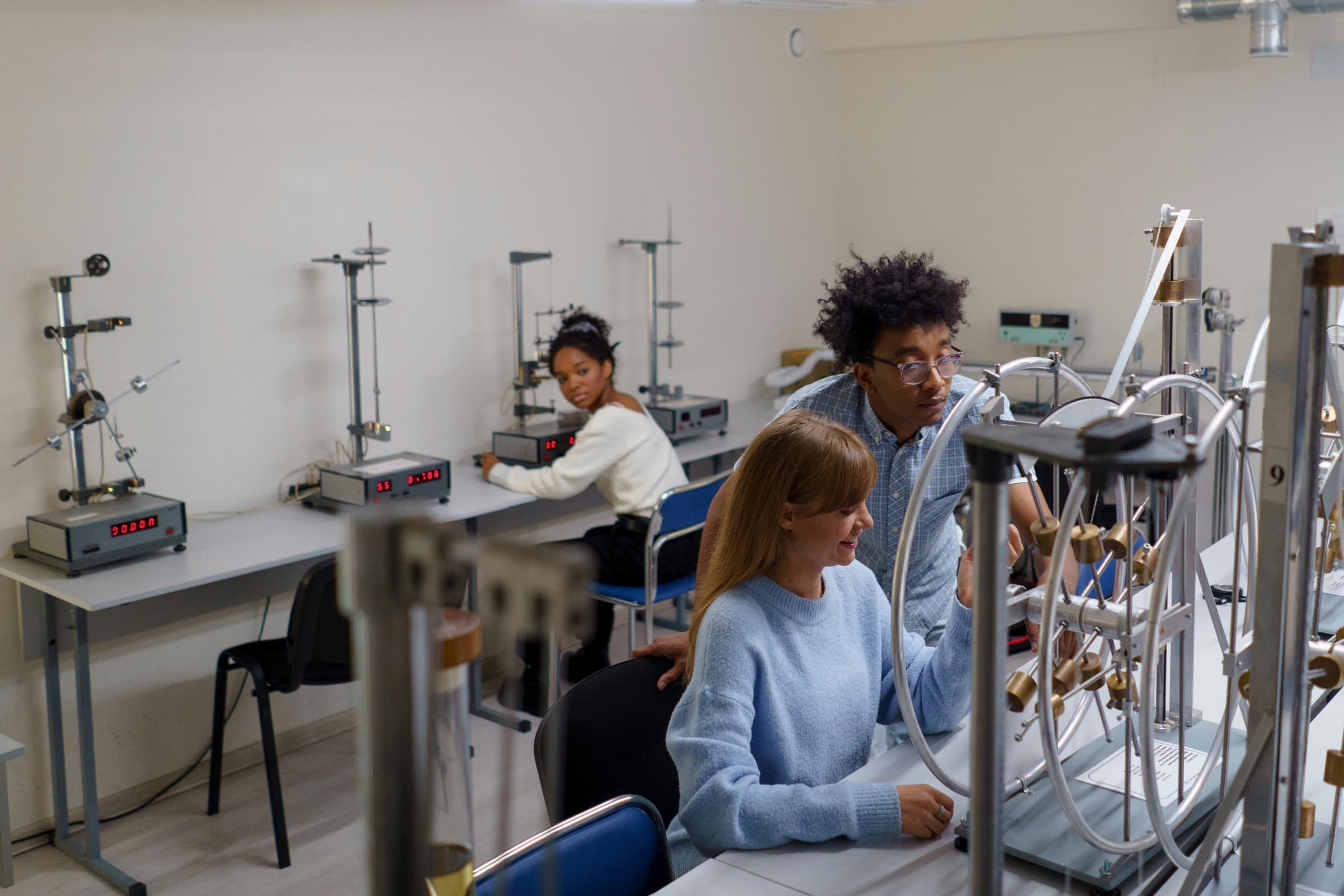
The Physics track introduces students to research through the quantitative study of motion, forces, energy, fields, waves, and the principles that govern the natural world. Projects may involve classical mechanics, electromagnetism, optics, thermodynamics, modern physics, computational physics, or guided study of physical models. Students learn to move beyond memorizing formulas and instead engage physics as a way of asking precise questions, connecting mathematics with intuition, and thinking critically about how models describe reality.
Astrophysics / Astronomy
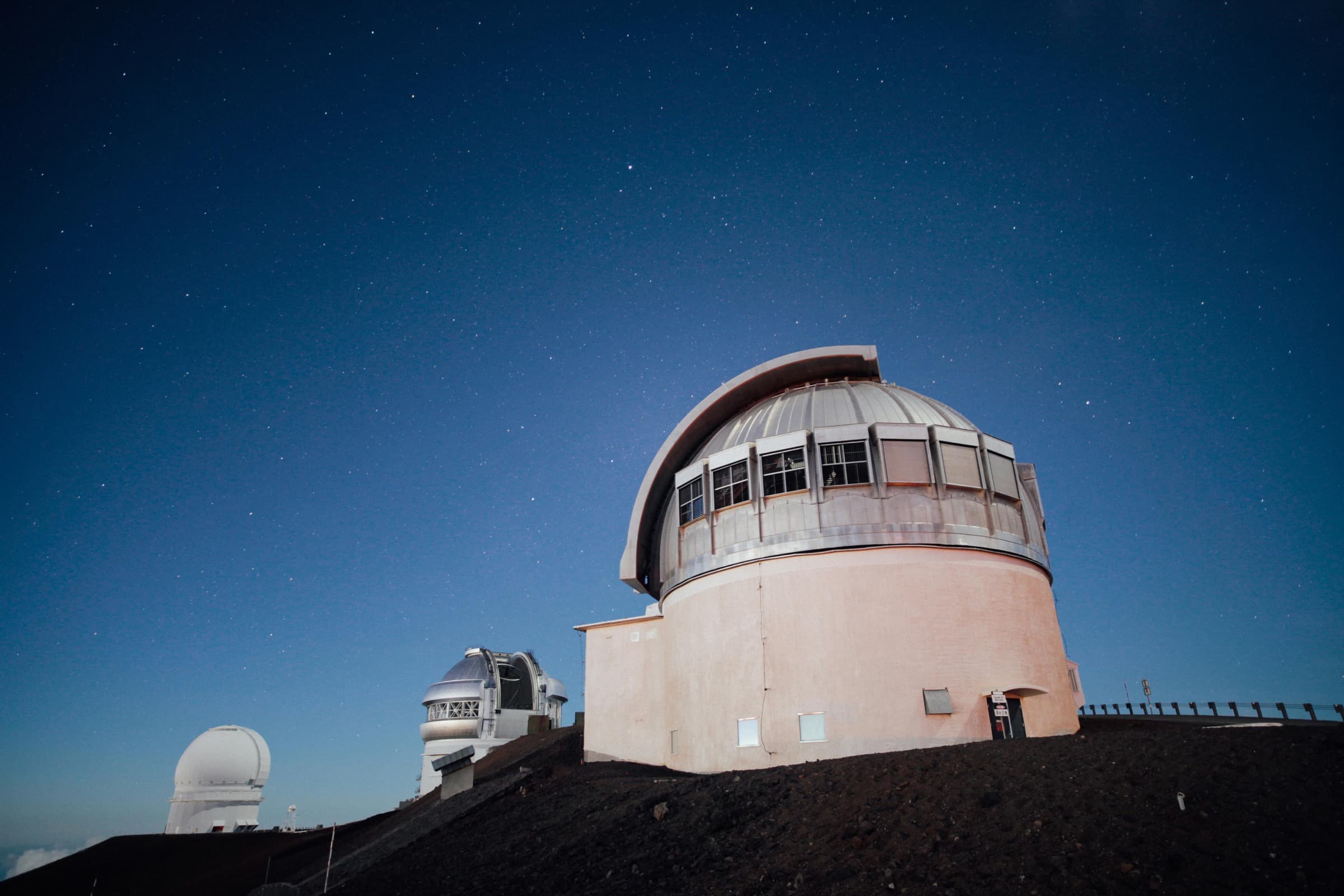
The Astrophysics / Astronomy track is designed for students fascinated by planets, stars, galaxies, black holes, cosmology, and the large-scale structure of the universe. Students may explore stellar evolution, orbital motion, exoplanets, galaxies, cosmology, observational astronomy, image analysis, or the interpretation of public astrophysical data. This track emphasizes both wonder and rigor by showing how astronomers turn distant observations into scientific knowledge through careful measurement, modeling, and disciplined inquiry.
Mechanical Engineering
The Mechanical Engineering track introduces students to research grounded in design, mechanics, motion, materials, and the analysis of physical systems. Topics may include statics and dynamics, thermodynamics, fluid mechanics, materials behavior, robotics, manufacturing, CAD-based design, or mechanical modeling depending on available projects. Students are introduced to engineering as a process of structured problem-solving and iterative improvement, with mentor support focused on technical reasoning, design awareness, and performance tradeoffs.
Economics and Finance
The Economics and Finance track introduces students to research through the study of markets, incentives, decision-making, public policy, and the quantitative analysis of economic and financial systems. Students may explore topics such as microeconomics, macroeconomics, behavioral economics, development economics, financial markets, investment theory, inequality, labor, trade, or applied data analysis depending on their interests and project scope. With mentor guidance, participants learn how economists and finance researchers move from broad questions to structured analysis, and how evidence, theory, and critical thinking come together to better understand complex systems that influence everyday life.
Financial support
- There is no tuition to participate in the program.
- The program is designed to make high-quality academic mentorship and research exposure more accessible regardless of financial circumstance.
- First-generation students and students from underrepresented backgrounds are strongly encouraged to apply.
Frequently asked questions
Do students need prior research experience?
No. The program is intentionally designed for students who may be conducting a research project for the first time.
Is there a minimum GPA requirement?
No. There is no minimum GPA requirement for this program.
What kinds of STEM fields may be available?
Available subject areas may include Mathematics, Computer Science, Electrical Engineering, Chemistry, Physics, Astrophysics and Astronomy, and Mechanical Engineering.